Behind the work: building the Leica RTC launch campaign
Some projects stay with you because of the work. Others stay with you because of the people, the trust, the intensity, and the feeling that you were allowed into something important.
The Leica RTC launch campaign has been one of those projects.
It started back in October 2025, when Leica Geosystems invited us to pitch for a major product launch. On paper, the brief was clear, but almost immediately it felt bigger than a list of deliverables.
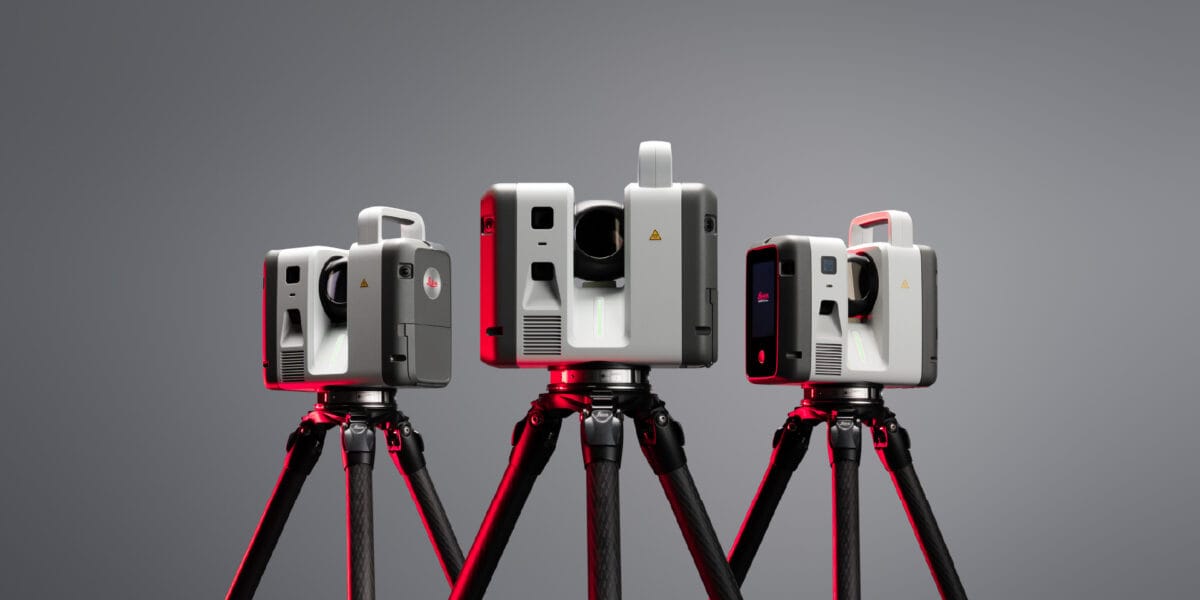
This was a huge moment for reality capture. A new generation of Leica RTC laser scanners was preparing to come to market, supported by software intelligence, real-time collaboration, and a more connected field-cloud-office workflow.
For the people inside Leica Geosystems, this was years of development, decisions, engineering, pressure, pride, and care. For our main client Michelle, who has been with the company for more than 20 years, this product was something close to her heart. You could feel that from the beginning.
So instead of responding to the brief in the most expected way, we started with the narrative.
Ricky and I wrote a first-take narrative for the campaign, and we brought in our art director Paavo and our film director Jere to create a mood reel and explore the visuals. It was not a finished campaign. It was not a neat answer to every line of the brief. But it showed understanding. It was a bold leap of faith that demonstrated our creative approach early.
It showed that this launch was about new scanners, but also about a shift in how the work actually happens.
Projects move faster now. Decisions happen while work is still unfolding. Field teams, office teams, engineers, operators, and specialists all need to stay connected, because the old rhythm of scan, process, share no longer reflects the way projects really move.
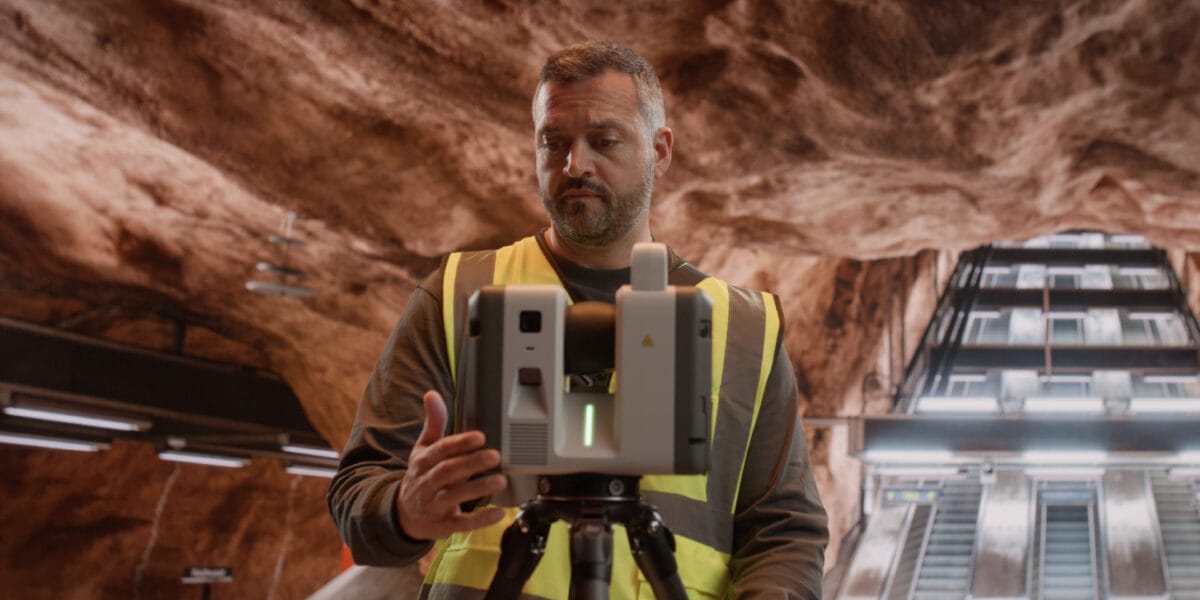
That became the beginning of the campaign idea: Leica RTC as a new dimension in reality capture. For the orchestrators of progress.
A story about product excellence meeting workflow intelligence. A story about accuracy, reliability, and trust opening into something more connected, scalable, and collaborative.
The client’s response gave us confidence that we were onto something. They explicitly told us that we had not answered the briefing questions in the expected way, but what we provided was so much richer. They loved the direction and, more importantly, they trusted us enough to let us in properly.
And so we were selected as the lead concept agency.
I still find this remarkable when I think about where we are in the world: a small but mighty city of around 120,000 people, surrounded by lakes and forests. I always knew our team was special, but being tested on a global stage was a huge deal for all of us. This is the second time we have won against global agencies in big cities, and I feel incredibly proud when I think about that.
Being invited in
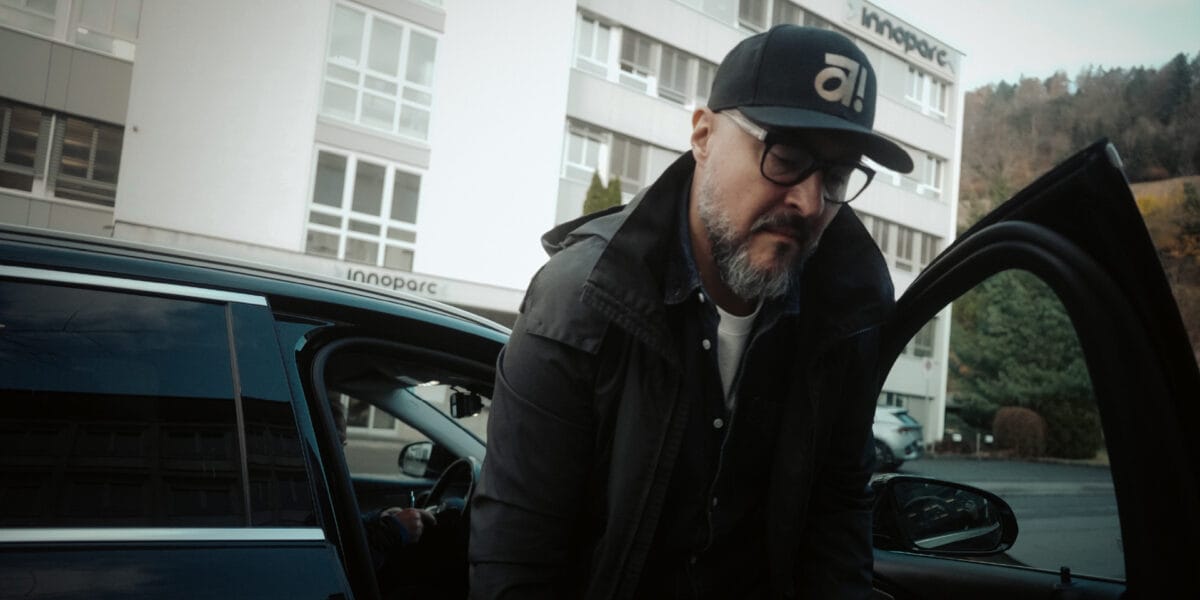
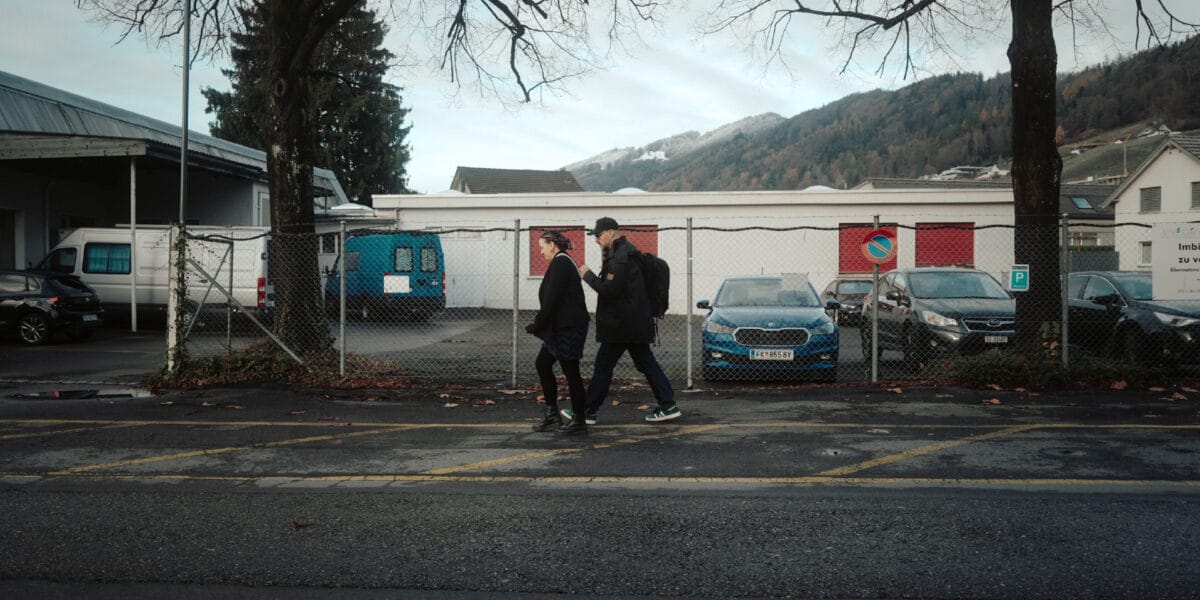
In November, after the pitch, Leica Geosystems invited our team to Heerbrugg for a workshop.
Ricky, Paavo, Jere and I travelled there to meet the people behind the technology. We facilitated an alignment session with a wide group of stakeholders, from software development and product management to business directors, marketing, and sales.
We also got to tour the factory, see the product, and experience a product demo.
That trip was one of the pinch-me moments where the work became real.
We were not sitting outside the organisation trying to package something we did not understand. Michelle invited us into the world behind it. We saw where the product was being built. We heard how people talked about it. We felt the responsibility around it.
Michelle brought us in so openly. She trusted us with the process, the people, and the complexity. Kerry and Chris, who joined from the US side, became part of the core collaboration from early on.
From December through to launch, we met every week. We discussed, shaped, reviewed, questioned, refined, and moved the work forward together.
That kind of trust is rare.
It meant the campaign did not develop as a handover from client to agency. It developed as a shared process.
They knew the product, the business, the audience, the sales and marketing strategy, and the stakes. We brought the narrative, creative structure, visual thinking, film direction, and campaign system. The work became stronger because both sides stayed close to it.
Finding the emotional centre of the story
One of the biggest challenges was that Leica RTC is expansive and complex. There are new scanners, software intelligence, real-time collaboration, multiple workflows, field-cloud-office connectivity, and a bigger shift towards coordinated project intelligence. There were so many features, benefits, audiences, and internal priorities to consider.
But if everything matters, nothing is remembered.
So we kept coming back to the human truth.
Reality capture professionals work in environments where precision matters, where decisions carry weight, and where there is often no margin for doubt. They are responsible for turning complexity into clarity. They connect what is captured in the field with what needs to be understood and decided elsewhere.
That is where the idea of “the orchestrators of progress” came from.
It gave us a way to speak to the people behind the work, not just the technology in their hands.
And once we had that, the campaign had an emotional centre.
Building a campaign system around the idea
Once the emotional centre was clear, the work could start expanding.
The campaign needed to do a lot. It had to introduce a new generation of Leica RTC laser scanners. It had to explain a more connected way of working across field, cloud, and office. It had to support multiple audiences, from surveying and construction to plant, public safety, and infrastructure. It had to work globally, across digital, print, social, event, film, and internal enablement.
And it had to do all of that while still feeling unmistakably like Leica Geosystems.
That was an interesting creative challenge.
We needed to respect the brand system, not fight it. Leica Geosystems already has a strong visual identity and a huge amount of trust in the market. Our job was not to reinvent that. It was to find the space inside the system where the campaign could breathe.
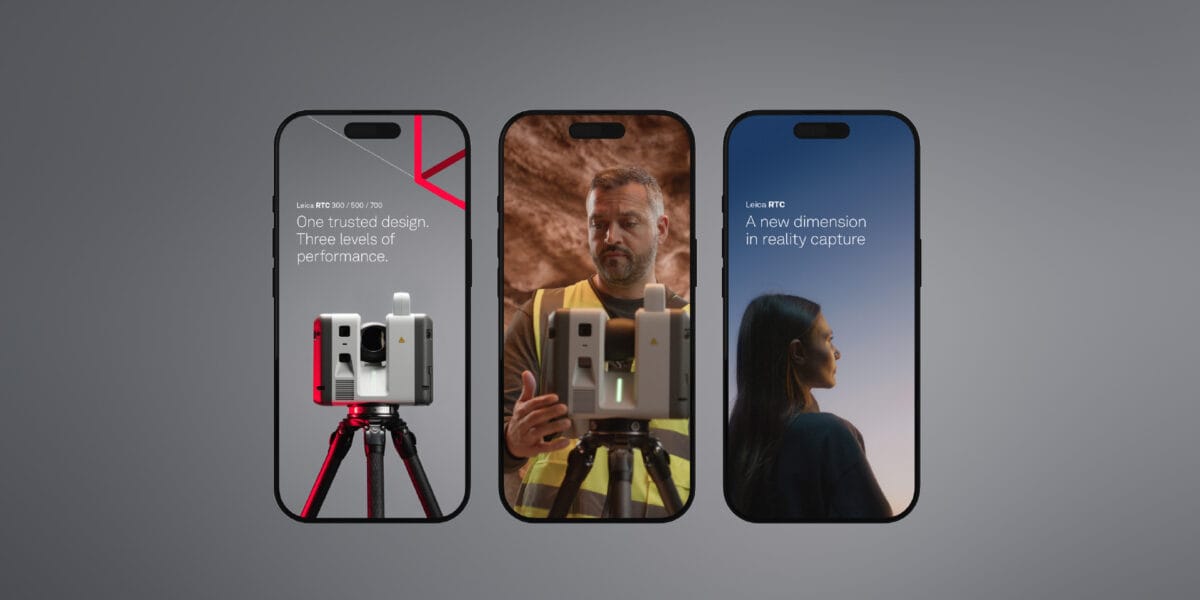
Paavo led the visual and sound development, exploring how the brand elements could be used with more atmosphere, motion, depth, and campaign-level distinction. We looked at how the scanner could be treated as the hero without making the work feel cold or purely technical. We explored how line elements, grey campaign backgrounds, product photography, software visuals, sound identity and motion behaviours could create a world around the launch.
Slowly, the system started to come together.
The line Ricky had from the very beginning, “A new dimension in reality capture,” gave us the conceptual anchor. The campaign master narrative gave us the context and structure. The visuals enriched the expression, and the film became the beating heart of the work.
From there, everything had to connect.
Key visuals. Website assets. Social templates. Print ads. Flyers. Event graphics. Launch film edits. Motion templates. Working files for Leica Geosystems’ internal teams.
This was about building a campaign system that could be used, adapted, localised by language, and extended by teams around the world.
That part mattered a lot.
A global launch does not live only in the first moment it goes public. It lives in the hands of the people who need to keep using it after the agency has stepped back. So we had to think about the system behind the system: templates, working files, guidelines, safe zones, localisation, future usage, and enough flexibility for different teams to make the work their own without losing the campaign idea.
That is the kind of design work that is not always visible in the final assets, but it is what makes a launch campaign useful.
Bringing the idea to life on film
The launch film became the emotional centrepiece of the campaign.
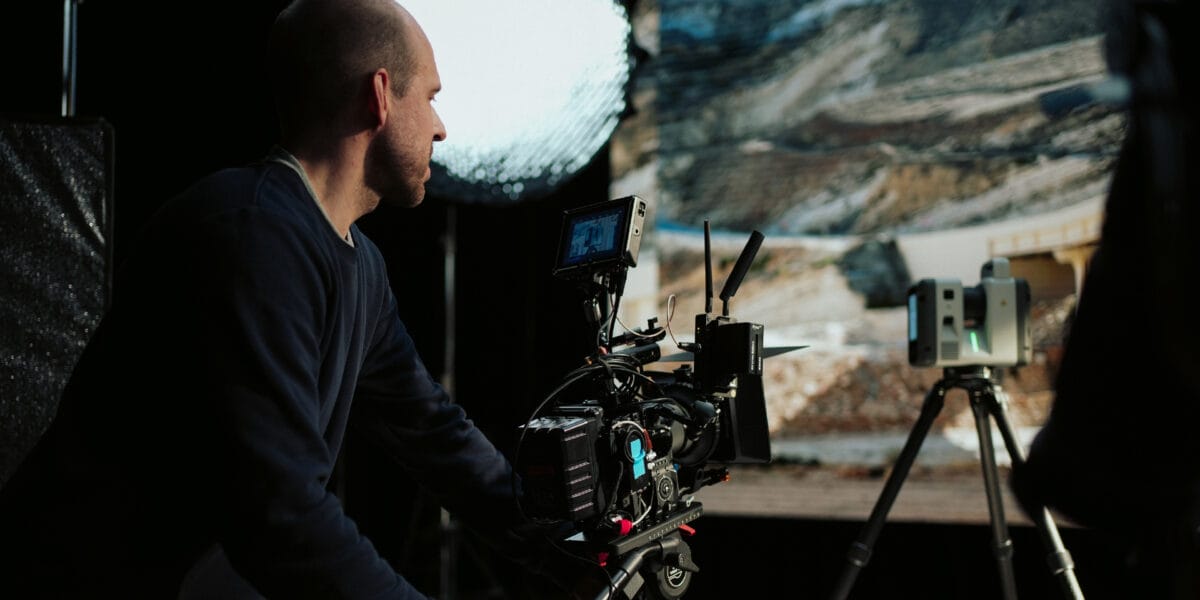
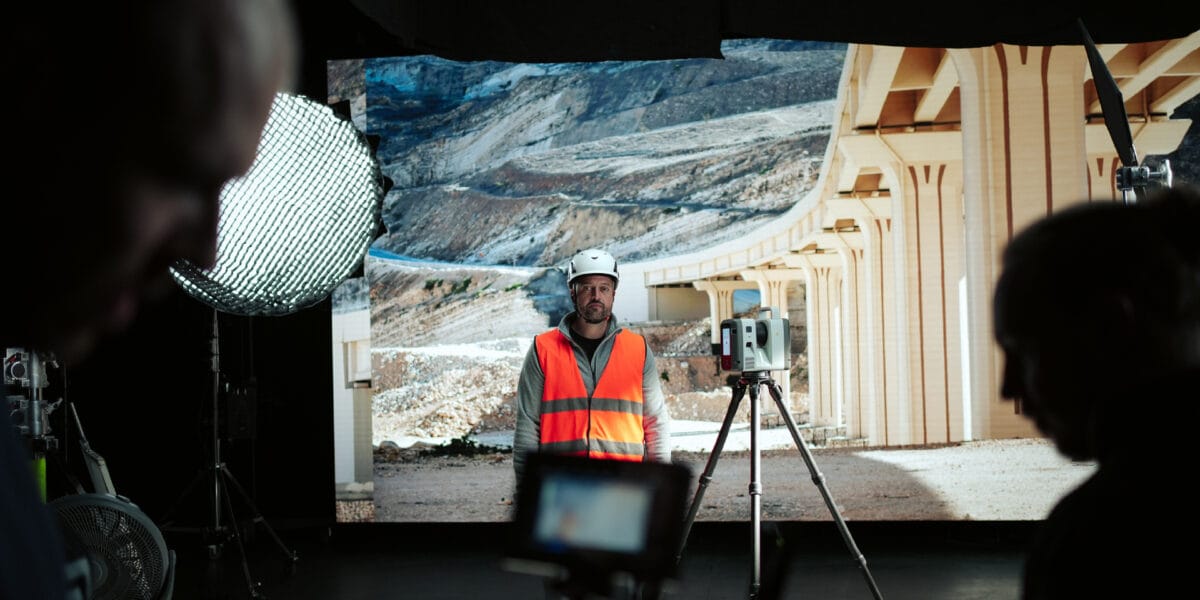
After months of narrative work, messaging, visual development, treatment planning, voiceover discussions, and production preparation, we filmed in a virtual studio in Helsinki.
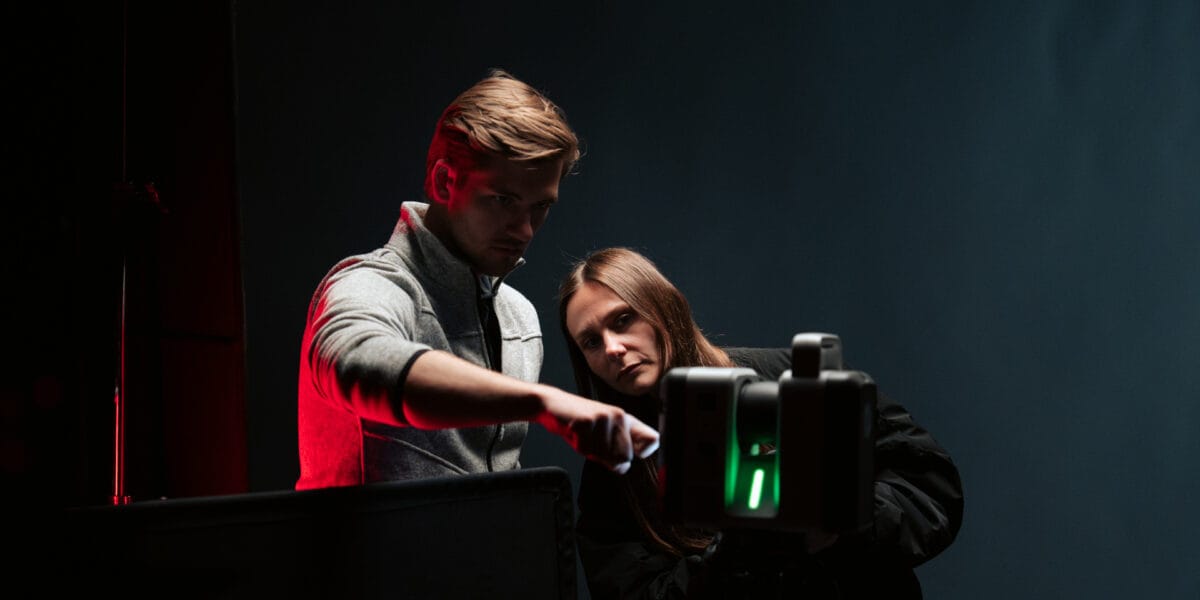
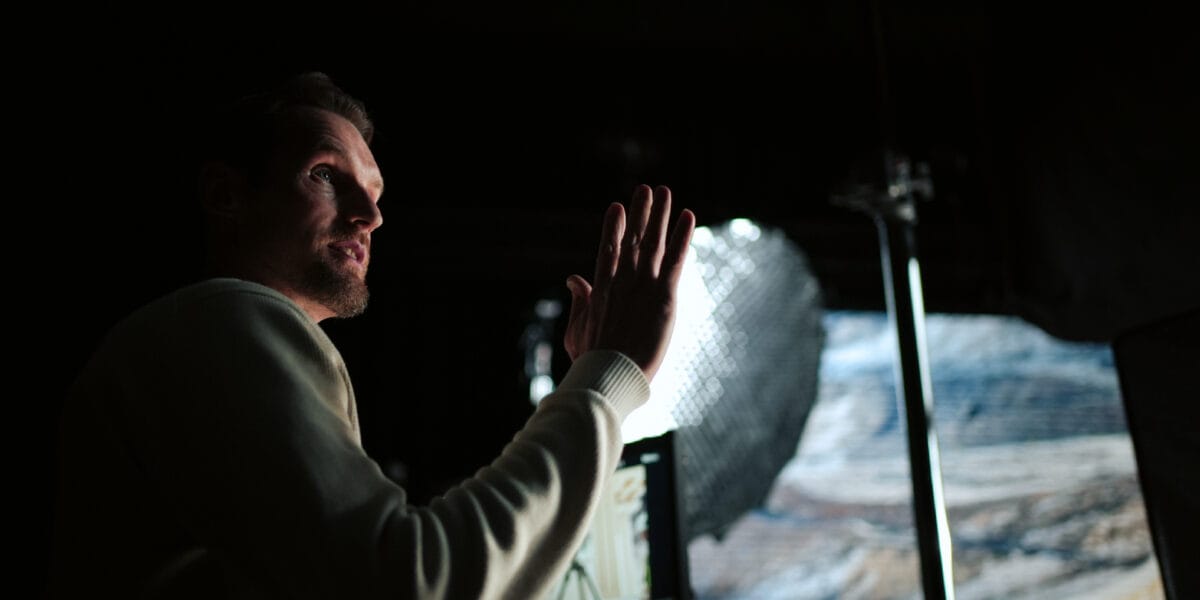
Three members of the Leica Geosystems team came to Finland to be our talent. That was important. These were not actors pretending to be close to the work. They were real people from the organisation, helping us bring the story to life from the inside.
The studio itself was incredible. Floor-to-wall screens, carefully planned lighting, the scanner on set, and a crew working through every detail to make the world feel precise, cinematic, and alive.
For three days, the idea became physical.
The scanner was there. The people were there. The campaign world was around us. The story we had been shaping for months suddenly had movement, light, scale, and presence.
The film’s role was to make the strategic shift felt.
It needed to honour Leica Geosystems’ foundation in precision, accuracy, and reliability, while opening up the bigger idea: data shared as it is captured, people and decisions connected in one continuous flow, and individual accuracy becoming collective intelligence.
That was the heart of the launch film.
Not just what the new Leica RTC is, but what it changes.
The work behind the work
By the time we reached final delivery, the project had become much bigger than any one deliverable. There were also the conversations behind all of it.
The weekly meetings. The careful feedback. The moments where we had to simplify. The moments where we had to protect the idea. The moments where the Leica Geosystems team helped us understand what mattered, and the moments where we helped shape that complexity into something people could feel.
That is often the hidden part of work like this.
People see the final film, the final headline, the final visual. They do not always see the trust that made those things possible. They do not see the hundreds of decisions underneath the surface. They do not see how much listening happens before anything good can be made.
For me, that is what made this project so rewarding.
It reminded me that strong creative work does not come from simply making something look good. It comes from being trusted with complexity, finding the thread inside it, and building something that helps other people believe in the story too.
A launch worth remembering
When we sent the launch film to the client, the response reminded us why this work matters.
Michelle told us that in 15 years, this one really hit. She said she cried when she saw the film.
That kind of response is hard to put into words.
Of course, we want the work to be strategically right. We want it to be beautifully made. We want it to support sales, marketing, launch, localisation, and long-term use. All of that matters.
But when a client who has lived with a product for years feels that the work has captured something true, that is something else.
That is the moment you realise the campaign has not just communicated the product. It has honoured the effort behind it.
For us, the Leica RTC launch campaign has been one of those rare projects where strategy, creativity, product innovation, and partnership came together in the right way.
It asked us to listen before creating.
To build trust before building assets.
To find the emotional centre of a technical story.
And to remember that behind every major launch, there are people who care deeply about getting it right.
The result is a campaign designed to introduce more than a new product.
It introduces a new way of working.
A new dimension in reality capture.
Words by:
Megan Järvinen
Visuals prepared by:
Paavo Ceder
The Leica RTC launch team:
Ricardo Patino, Creative Director
Megan Järvinen, Creative Strategist
Satu Hilden, Project Manager
Paavo Ceder, Art Director
Jere Vainikka, Director, Producer / Film & Video
Lauri Hakala, Director of Photography / Film & Video
Minttu Stranius, Designer