
So why the hell do we try so hard to intellectualise it?
March 19th 2026

Megan Järvinen
Creative Strategist
Research into the agency–client relationship often arrives at the same conclusion. Clients say creativity is one of the most important qualities they look for in an agency. And yet, when it comes time to invest in creative work, the conversation often becomes more complicated. Creativity is negotiated. Budgets are questioned. The price feels difficult to justify.
Instead, many clients feel more comfortable investing in media, platforms, or performance marketing. These things appear more tangible. They come with dashboards, numbers, and a sense of predictability.
Creativity, by contrast, can feel uncertain. Harder to measure. Harder to explain. Harder to buy. So agencies respond in a predictable way. They begin trying to prove the value of creativity by intellectualising it. Strategy frameworks. Data layers. AI tools. Conversion models. Performance systems.
None of these things are wrong. In fact, they are often extremely useful.
“Creativity does not behave like a production line.”
But over time something subtle begins to happen.
Creativity slowly moves from the centre of the work to the edges of it. The industry begins talking more about optimisation than ideas. More about systems than imagination. And slowly, the very thing clients say they value most begins to fade into the background.
Somewhere along the way, agencies also start treating their creative teams like factories. The expectation becomes simple. Keep producing. More ideas. More campaigns. More output. But creativity does not behave like a production line.
Every person carries an almost infinite reserve of creativity. I think of it as an underground vault in a bank. As long as we keep making deposits, the account is rich. Curiosity. Exploration. Time to think. Space to experiment.
But when the industry only makes withdrawals, the vault eventually runs pretty dry.
And when that happens, the work slowly becomes safe and predictable. Not because people lack talent, but because they are simply too tired to do anything else.
And there is another side to creativity that clients almost never experience. The human side. The messy, unpredictable process where ideas are explored long before they become polished. Creativity requires space for those bad ideas, because hidden somewhere inside them is usually the one idea that changes everything.
But that process requires three critical elements: Safety, time and really fucking good boundaries.
People need to feel safe enough to say something unfinished. Safe enough to be wrong. Safe enough to explore an idea without immediately defending it. Without that environment, creativity simply does not happen. As a creative strategist, one of the most rewarding parts of my work has very little to do with what I produce personally.
It is about bringing the right people together around a challenge and creating the conditions for them to succeed. I never want to hand anyone a shit sandwich.
Matching our people to our clients’ people. Connecting different kinds of talent. Creating an environment where people feel able to contribute what they do best.
People who bring deep expertise. People who can make complexity feel human. People who can evoke our senses in the most beautiful and unexpected ways. And people who are curious enough to explore ideas together.
The problem stops belonging to one department or one individual. It becomes shared. And people begin to discover something together that none of them would have found alone. Sometimes the outcome of that process goes far beyond a single piece of work.
I have seen even the most level headed engineers brought to tears during presentations. Not because we created something dramatic, but because we helped reveal a truth about their work that they had never quite seen from the outside.
For the first time, they were able to step back and see the full picture of what they had built. The years of knowledge. The care behind their decisions. The real impact their work had on customers and the world around them.
From the inside, their work had always felt technical and practical. From the outside, it is remarkable. When people see that shift, something changes.
Communication, marketing, advertising and branding stop feeling uncomfortable. It stops feeling like boasting or exaggeration. Instead it becomes something much simpler. A way of confidently communicating what they stand for. A way of sharing the value they bring to the world.
And often, for the first time, they feel genuinely proud to tell that story. This is the part of creativity that rarely shows up in pricing conversations. Creativity is not just the final delivery. It is the process of discovery that happens long before the work reaches the public. It is the moment when people realise what truly makes them valuable. The moment when a team recognises the meaning behind the work they do every day.
“Creativity does not need to be fully understood to be valued.”
And that process almost always begins with a thousand bad ideas. Ideas that go nowhere. Ideas that collapse after days of work. Ideas that make us laugh. But without those ideas, the remarkable one never appears.
Perhaps the challenge between agencies and clients is not really about understanding creativity. Creativity has never been something that can be fully explained. The process is messy. Human. Unpredictable. Ideas appear from strange places. Conversations drift. Dead ends are explored. A thousand thoughts go nowhere before one suddenly changes everything. Trying to rationalise that process into something neat and predictable will always fall short. Creativity does not need to be fully understood to be valued.
Let’s not try to explain creativity perfectly. But let’s stand for it. Value it. And most importantly price it according to that value, not time. And let our reputation speak for itself.
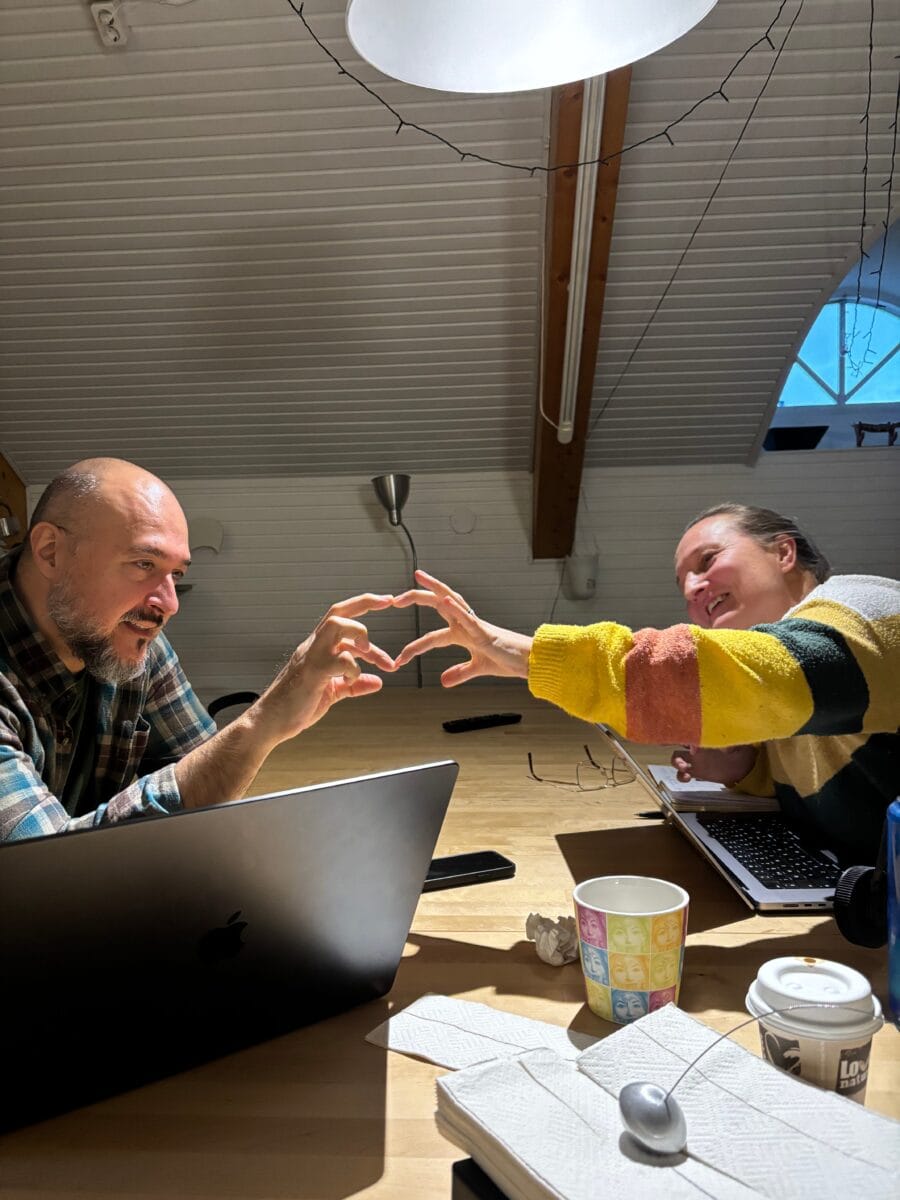
I also think we could invite people, I mean our clients, into creativity, and allow them to experience the magic for themselves. And for the love of all things, please can we meet in person more?
Let’s share the process. Let people experience the moment when a group begins uncovering something meaningful together. Because creativity is such a rush. It is thrilling. And it is intrinsically valuable.
It is real.
And when creativity is truly valued, we no longer need to intellectualise it. Creatives have time and feel safe enough to explore. Teams feel proud of what they create together. Organisations recognise the extraordinary things they have built and see the impact in the real world. The work becomes braver. The ideas become stronger.
So please, can we start investing in creativity again?
Megan Järvinen
Creative Strategist
—-
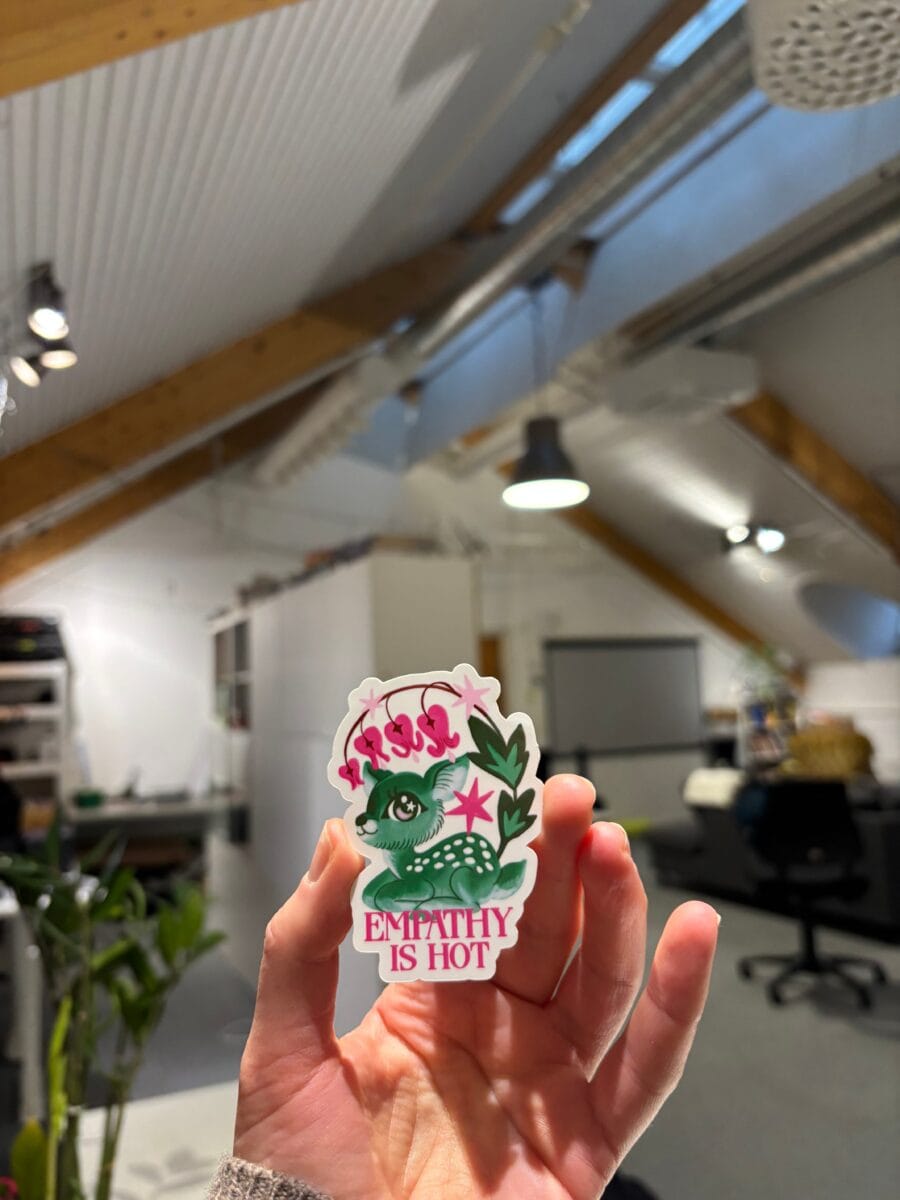
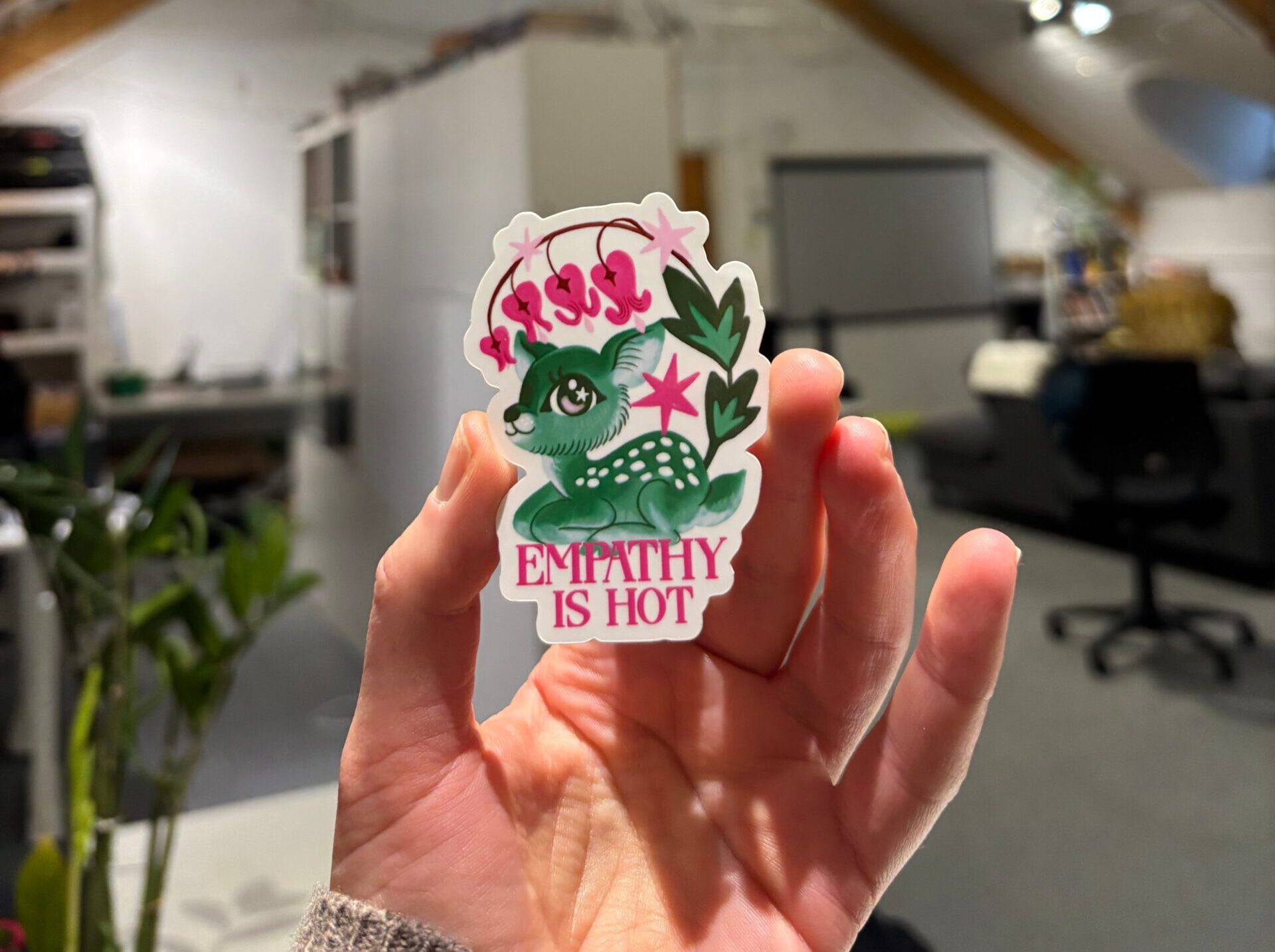
Header picture: Sticker by Saara Obele.










Takeaways from Ben Horowitz’s What You Do Is Who You Are
September 23rd 2025
Megan Järvinen
Brand Strategist
A few weeks ago, my colleague Kimmo encouraged me to listen to What You Do Is Who You Are by Ben Horowitz. I jumped at the chance. For me, books become more meaningful when the experience is shared. I always remember more and think more critically about the work of the author when I know I’ll be reflecting on the ideas with someone else.
As I listened, I started jotting down the lessons that really spoke to me, with the intention of sparking a richer conversation with Kimmo when we eventually sat down to unpack the book together.
These are the five insights that stood out the most. I think they’re especially helpful for anyone navigating culture, leadership, or just trying to make better choices at work. I’ve also included some of the real-world examples Ben shares in the book, which bring the ideas to life and show how they play out in high-stakes situations.
I hope these reflections offer something useful for your own leadership or team.
1) Trust is the foundation of everything
You can’t build anything that lasts without trust. It is the invisible infrastructure of any relationship, team, or company. It determines how fast a team can move, how freely people speak up, and how much leadership needs to micromanage. If you don’t have trust, you have to overcompensate with process, oversight, and control.
As Horowitz puts it:
“If I trust you, I require no explanation.
If I don’t, then no amount of explaining will change that.”
This was crystallised in his account of Shaka Senghor, who spent 19 years in prison (seven of them in solitary confinement). In an environment shaped by violence, fear, and survival, he made the decision to completely transform who he was. He began by taking full responsibility for his past and rejecting the belief systems that had led him there.
Over time, Senghor’s influence as a cultural leader changed the culture of his prison unit. He replaced fear with fairness. Rather than trying to change the culture through top-down declarations, Senghor lived the values he wanted others to adopt. He led discussion groups and personal development sessions, helping other inmates (and guards) work through their own trauma, choices, and future goals. By changing himself, Senghor changed what it meant to be respected inside the unit. Strength was no longer defined by aggression or dominance, but by restraint, wisdom, and accountability. As Senghor’s reputation grew, inmates began to adopt his behavioural norms. Violence in his unit decreased and he gained the trust of fellow inmates and prison guards. After his release, he carried those same principles into public life, becoming an author, mentor, and speaker who continues to inspire others.
Trust is the first step to changing any culture, whether in a prison block or a work environment. And it is built moment to moment in how we communicate and show up every day.
Over time, trust accelerates decisions, deepens connections, and enriches the work. Without it, even the most well-documented strategies fall apart.
2) Ethics means choosing the hard thing
Often, choosing the right path is not the easy one.
Culture fails when ethics are performative or ignored in favour of short-term wins. In the book, Horowitz uses Uber’s early culture as a cautionary tale. A company that scaled rapidly, but at the cost of its internal integrity. He draws from Frances Frei’s time as a cultural advisor at Uber, highlighting how the company structurally rewarded toxic behaviour. Teams were encouraged to compete rather than collaborate, creating silos where information was hoarded. Horowitz also recounts an incident where a formal complaint was filed against a high-performing manager for inappropriate conduct. Despite the seriousness of the complaint, Uber leadership chose not to act because the manager was considered too valuable to lose. In doing so, they sent a clear cultural signal that performance mattered more than principles. When organisations protect results over integrity, they institutionalise the very behaviours that erode trust from the inside out.
In contrast, Horowitz points to the leadership of Toussaint Louverture, the former slave who led the Haitian Revolution and transformed Haiti into the first Black republic. Louverture governed with unwavering moral discipline. He made difficult ethical decisions, such as forbidding revenge against former slave owners and insisting his troops maintain strict codes of conduct, especially when emotions ran high and retaliation would have been easy. His leadership was about doing what was right to secure real and lasting freedom.
Where Uber’s culture reflected a pursuit of success at any cost, Louverture’s legacy demonstrates the opposite: that leadership grounded in ethics can outlast and outshine any short-term gain.
Ethical decisions are often uncomfortable. That doesn’t mean they’re wrong. It means they matter.
3) Lead like a samurai
The way of the samurai teaches us to meditate on catastrophe not to attract it, but to become immune to its power. In What You Do Is Who You Are, Ben Horowitz draws on the ancient code of the samurai to make a powerful point: leaders must deliberately confront their worst fears, not avoid them. When you’ve already imagined and accepted the possibility of failure, betrayal, or loss, you can diffuse their power over your leadership style.
And if you’ve already made peace with the storm, you don’t panic when the clouds roll in.
Horowitz shares the story of Yamauchi Kazutoyo, a disciplined and thoughtful samurai who rose to power not by being the most feared warrior, but by acting with consistency, grace, and unwavering self-control. Kazutoyo prepared for hardship, not in panic, but in peace, so that when a crisis came, he already knew how to respond.
This is more than discipline. It’s cultural. The samurai believed that clarity about how to act under pressure was itself a form of safety. If you’ve thought through the worst, you don’t hesitate. And when a leader knows what to do, others feel safer too.
Horowitz also highlights one of the most powerful lessons: training makes behaviour automatic. Samurai didn’t assume they’d rise to the occasion through willpower. They trained so relentlessly that the right response became instinct. Their conduct under pressure wasn’t improvised.
That’s the real lesson for modern leaders. Culture isn’t just what people believe. It’s how they’ve been trained to behave, especially when things go wrong. If you haven’t practiced acting with fairness, courage, or discipline, those virtues won’t suddenly show up in a crisis.
And this ties back to a core distinction Horowitz makes:
-Values are what you believe.
-Virtues are what you do when it matters.
You can say you value courage, but if you avoid hard conversations or defer responsibility, your actions tell a different story. Culture isn’t shaped by what we claim to believe. It’s shaped by the virtues we consistently demonstrate, especially under pressure.
4) Culture and strategy: the long-term formula
In the rush to deliver results, culture can feel secondary to strategy. But as Ben Horowitz puts it plainly: a brilliant strategy will fail if your culture doesn’t support it. And a great culture, without direction, can drift into confusion or complacency. One without the other is incomplete. Together, they’re the foundation of resilient, high-performing organisations.
Culture isn’t just a vibe. It’s how decisions get made, how conflicts are resolved, and how people treat each other when no one’s watching. It guides what people do when priorities shift, pressure builds, or uncertainty hits. And it determines whether strategy gets implemented cleanly or bogs down in politics, inertia, or fear.
That’s why Horowitz urges leaders to see culture as a long-term investment. If you don’t intentionally shape it, subcultures emerge. Teams define “good” in conflicting ways. Engineering might prize precision, sales might prize speed, and the resulting friction becomes a hidden tax on progress. A strong culture creates alignment without uniformity, allowing different disciplines to move together, not against each other.
He also shares one of the most practical, often overlooked truths:
– Don’t reward indifference.
– What you tolerate becomes your culture.
– What you celebrate becomes your standard.
In other words, culture is revealed in how you respond to missteps and moments of ambiguity. Leaders must protect clarity, ownership, and speed by reinforcing them in the day-to-day. If someone shrugs off responsibility and nothing happens, that becomes the standard. If someone takes initiative and it goes unnoticed, that too becomes the standard.
Ultimately, fast and aligned decision-making, one of the clearest markers of a well-functioning company, relies not just on strategy, but on a culture that supports action, trust, and accountability.
Culture is the long-term bet you place every day. And it either compounds or corrodes.
5) Know when you’re in peace and when you’re at war
One of Horowitz’s most enduring frameworks is the distinction between the Peacetime CEO and the Wartime CEO. And it holds valuable lessons for cultural leadership.
In peacetime, your role is to optimise, expand, and invest in long-term systems like hiring, development, and morale. You focus on alignment, inclusion, and sustained growth. But in wartime, when the business faces serious threats from market shifts, internal breakdowns, or existential risks, the tone changes. Leaders must act decisively, move fast, cut through ambiguity, and make tough, sometimes unpopular, decisions to protect the organisation.
The key isn’t picking one style. It’s recognising the moment you’re in and having the courage to switch when the stakes demand it.
This matters culturally because both styles rely on trust and clear communication. Great leaders don’t lead the same way in every situation, but they also don’t abandon their principles under pressure.
Culture isn’t just what you build when things are calm. It’s what you protect when things are uncertain.
Final thoughts
One belief that shifted for me while listening was the familiar line often credited to Peter Drucker: “Culture eats strategy for breakfast.” I used to accept that without question. But Horowitz reframes the relationship entirely. Culture doesn’t eclipse strategy, and strategy doesn’t override culture. The real power lies in how the two work together.
Since then, I’ve been returning to these notes and thinking about how to integrate the learnings into my own work and into the work we do with our clients. If strategy is shaped by culture, and culture can be shaped through strategy, then the two are deeply interconnected. You can’t make lasting progress in one without working on the other.
We need to embed cultural work into our strategic conversations.
Building an enduring culture is complex and requires deliberate effort, clear decisions, and consistency over time. It won’t ever be perfect, but it can be influenced. And the hardest part? You can’t fake it, and you can’t shortcut it. You build it by doing the right things over and over.
Megan Järvinen
Brand Strategist